

Hot Melt: Hot Applied Liquid Waterproofing
Hot melt is a trusted waterproofing system suitable for large commercial projects such as warehouses, supermarkets and industrial units as well as residential projects.
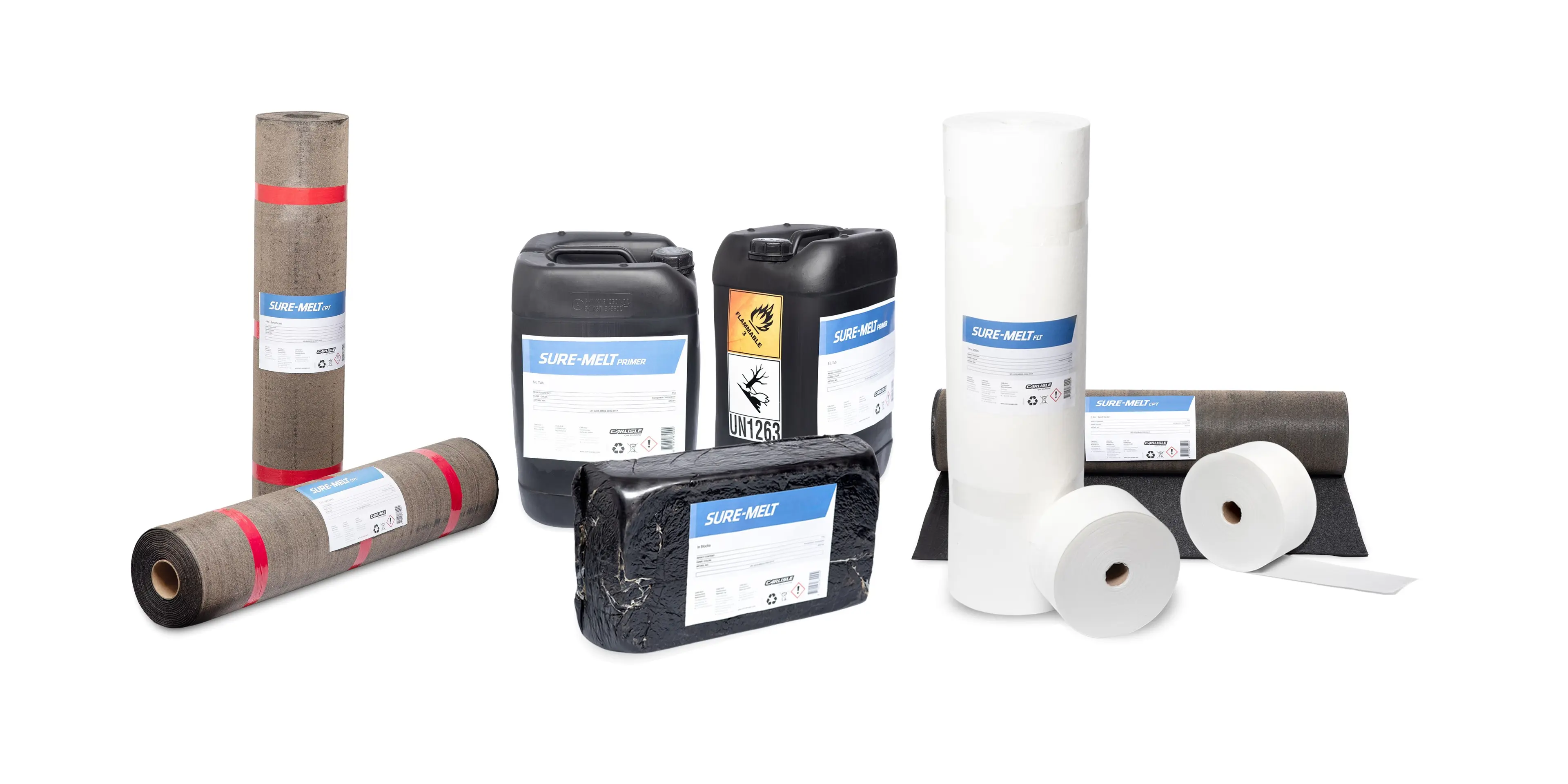
Engineered to outlast buildings, Our SURE-MELT® bituminous system ensures a risk-free, leak-free roof, eliminating replacement costs due to its durability, fast installation, and robust performance in challenging conditions.
Find out more about SURE-MELT® and how it can help your project.
What Is Hot Melt Waterproofing?
Hot melt waterproofing is a system that uses a hot liquid bitumen to create a strong, seamless waterproof layer. This substance solidifies as it cools, providing a durable barrier against water. It adheres well to many surfaces, including concrete and timber.
Some features of hot melt waterproofing include:
Long lifespan
Resistance to extreme weather
This system is ideal for flat roofs, offering robust protection and the ability to withstand a range of weather conditions. Its unique properties make it a preferred choice for a wide range of building projects.
How Hot Melt Waterproofing Systems Work
Hot melt systems work by creating a fully bonded, seamless membrane that blocks water from travelling between layers. The waterproofing compound is delivered to the roof as a heated liquid and then applied to the prepared substrate. As it cools, it forms a continuous barrier that remains flexible and strongly adhered to the surface beneath.
While exact specifications vary by manufacturer and project design, the system typically works through these core stages:
Pre-Installation Cleaning:
Thorough cleaning: The roof area must be completely cleaned of all dust, debris, concrete splatter (“snots”), and laitance before applying the SURE-MELT® Primer.
Drying After Moisture: If the roof has experienced rain or snow, ensure the substrate is fully dry before proceeding. Allow sufficient time for moisture to evaporate and perform an adhesion test to confirm dryness.
Adhesion Testing:
Testing: Conduct, record and document adhesion tests at a minimum of six locations per 200m² of roof area.
Bond Test: These tests assess the suitability of the substrate to bond with the waterproofing membrane. They ensure adequate adhesion for a secure and long-lasting installation.
If there’s an issue with the adhesion during the testing process contact our Technical Department immediately.
Bond Test Method:
Melt the SURE-MELT® compound: Heat a small amount of compound according to the manufacturer’s instructions. Avoid overheating.
Carefully pour the molten compound onto the primed deck. Use a hand-held spreader to apply it evenly to a thickness of approximately 3mm, covering an area of 200-300mm.
Lay and embed a piece of SURE-MELT® Reinforcement Fleece (approximately 100mm) onto the hot compound and press it firmly to ensure good contact.
Allow the entire area to cool down completely before proceeding.
Bond Test:
Check adhesion: Once cool, carefully fold back a loose edge of the SURE-MELT® Reinforcement Fleece and pull it horizontally. If the compound peels easily from the substrate, the bond is not satisfactory.
Remedial action: If the bond fails, address the underlying issue (e.g., remove laitance, allow more curing) and repeat the application process.
After successful completion of the Bond Test:
Repair any cracks, irregularities, or weak areas in the substrate with an approved repair mortar before proceeding.
Use additional SURE-MELT® bituminous compound to fill minor depressions in the substrate if needed.
Always wear appropriate person
The key performance advantage comes from the combination of seamless application and full bond. If the roof is later penetrated or damaged, water cannot easily migrate laterally under the waterproofing, making investigation and repair easier than with loosely laid systems.
Key Benefits of Hot Melt Systems
Hot melt systems offer a range of benefits that set them apart in waterproofing. These systems are known for their seamless application, which minimises the risk of leaks. This feature enhances the durability and effectiveness of the waterproof layer.
Key benefits include:
Excellent adhesion to various substrates
Compatibility with green roofs and vegetation support
Exceptional thermal performance, enhancing energy efficiency
Common Applications and Suitability
Hot melt waterproofing is versatile, making it suitable for a wide range of construction needs. Its durability and seamless nature make it a viable choice for flat roofs, alongside alternative EPDM roof waterproofing systems. Buildings with unique architectural designs benefit from their adaptability.
A variety of settings use hot melt systems, including commercial and public buildings and in buried applications.
Some common applications include:
Flat roofs on commercial buildings
New constructions and refurbishments
Green roofs need root barriers
Because they offer versatility, hot melt systems are suitable for a range of climates and project types.
Hot Melt vs. Other Waterproofing Methods
When compared to other waterproofing methods, hot melt systems stand out for several reasons. They provide a seamless application, reducing the risk of leaks. Additionally, hot melt offers a longer lifespan, In contrast, some alternatives might require earlier replacements.
Key differences include:
Seamless application vs. seams in some methods
Longer lifespan
Better adhesion and flexibility
Installation Process and Maintenance
The installation of hot melt waterproofing is efficient and straightforward. It involves heating liquid bitumen, which is then applied directly onto the roof surface. This forms a cohesive, waterproof barrier as it cools.
Routine maintenance ensures the system's longevity, often exceeding three decades. Key maintenance steps include:
Regular inspections for damage
Clearing debris and dirt
Ensuring proper drainage
These simple steps help maintain the integrity and efficiency of the hot melt system over time. Regular upkeep minimises potential issues and extends its life.
